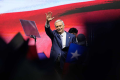
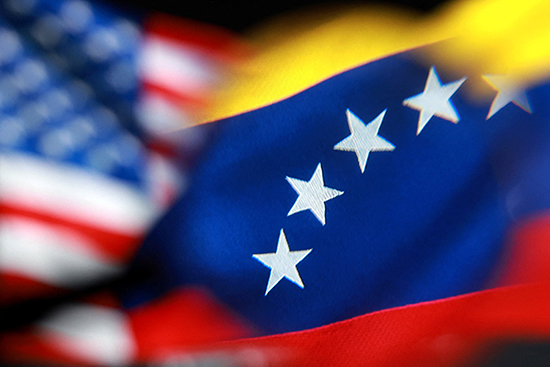
Photo: Dado Ruvic | REUTERS
On January 3, the U.S. carried out an operation that captured Venezuelan leader Nicolas Maduro and his wife Cilia Flores and brought them to New York to stand trial on drug trafficking charges. Subsequently, President Trump declared that the U.S. would take charge of Venezuela, and that Venezuelan Vice President Delcy Rodriguez would work with the United States. Many questions remain unclear. What is the future of Venezuela? How will the global community respond to this challenge to international law? And what does this seismic development mean for the Venezuelan oil sector and global energy security? What could this destabilizing juncture mean for regional partners in Latin America, as well as close Venezuelan allies like Cuba? What about positive reaction by conservative and populist governments in Argentina and Chile? Could this move toward a U.S. dominated sphere of influence in the hemisphere push some countries closer toward China?
Join analyst and author Peter Kornbluh, frequent contributor to The Nation and Foreign Policy, as he unwraps these developments and other big questions around this dramatic global crisis.
ABOUT THE SPEAKER
Peter Kornbluh is a senior analyst at the National Security Archive and the director of the Chile Documentation Project and the Cuba Documentation Project. He is also a longtime contributor to The Nation on Cuba, and is co-author, with William M. LeoGrande, of Back Channel to Cuba: The Hidden History of Negotiations Between Washington and Havana and author of The Pinochet File: A Declassified Dossier on Atrocity and Accountability. Kornbluh has spoken often for WorldOregon on political developments in Latin America.
WorldOregon (d/b/a World Affairs Council of Oregon) is a private, nonpartisan, nonprofit 501(c)(3) tax exempt organization founded in 1950 to broaden public awareness and understanding of international affairs and to engage Oregonians with the world.
We support the expression and discussion of ideas and opinions and encourage people to be informed citizens and engage with their communities at home and abroad.The views expressed by speakers and contributors to this organization’s public programs—on this website and through affiliated social media sites— are solely their own and do not necessarily represent or reflect the official policies or positions of WorldOregon, its individual staff, board members, or sponsors.